Epiphany
1/6/20263 min read
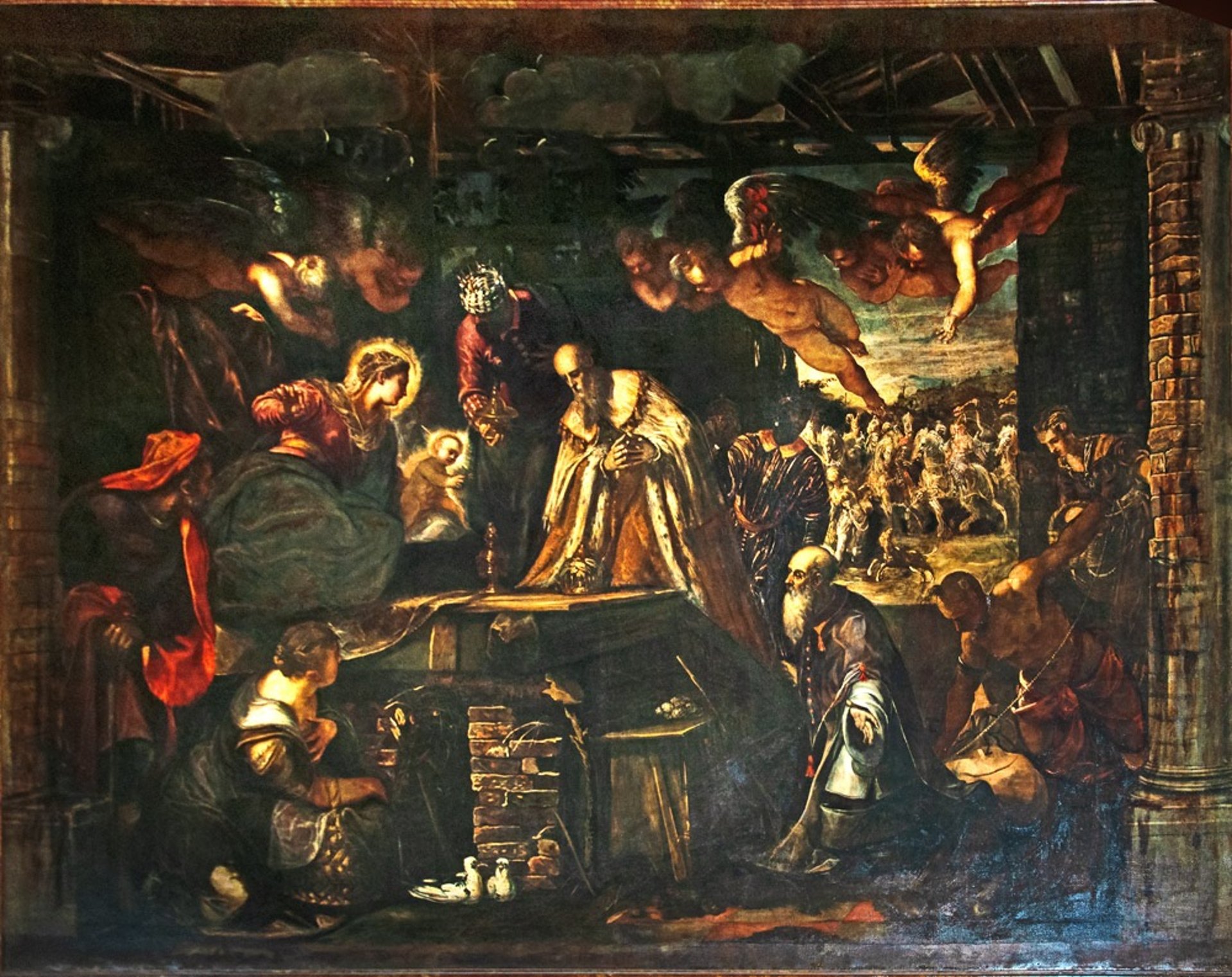
And behold, the star they had seen at its rising preceded them, until it came and stopped over the place where the child was. They were overjoyed …
The English word “epiphany” is a noun that means a “manifestation of” something. The word can be used to describe an subjective experience, as in “She had an epiphany.” Or the word can be used to describe an objective event, as in “The Epiphany of the Lord.” As a subjective experience, an epiphany connotes an manifestation that is revelatory, sudden, realized intuitively, and sometimes life-changing.
I am writing this on the traditional day of the Christian Epiphany, January 6. In the first three centuries of the early Church, the Epiphany feast subsumed four different events: the Nativity of Christ, the visit of the Magi, the Baptism of the Lord, and the Miracle at Cana, where Jesus changed water into wine. Eventually, these feasts became celebrated on separate days. When Pope Saint Leo the Great preached in Rome on the Feast of Epiphany in the middle 400s, he was preaching only about the visit of the magi.
The original inclusive meaning of the Christian Epiphany leads us to realize that the entirety of the life and ministry of Jesus can be understood as a series of epiphanies; that is, a series of revelations that lead us to understand that Jesus is the Savior and Son of God. This certainly includes the Transfiguration, the miracles of Jesus, and the Passion and Resurrection. The Gospel of John contains seven major miracles, which John calls “signs.” Near the end of the Gospel, John tells us, “[These signs] are written that you may come to believe that Jesus is the Messiah, the Son of God, and that through this belief you may have life in his name.”
In their home countries, the magi saw an unusual and bright star. Reasoning from their astrological science, and buttressed with a strong intuition that something momentous had happened, they set out to Jerusalem to find the newborn King of the Jews. But then the star disappeared. The disappearance of the star must have been disheartening to the magi. Have we misread the sign? Should we continue on? Perhaps we do not understand what we are looking for? Perhaps what we are looking for does not exist. Let stop for a moment to contemplate the nascent faith of the magi. There was no star, no starlight, but through some kind of faith they pressed on into the darkness. Indeed, they came into the very heart of darkness, the court of the jealous and duplicitous King Herod. After the magi had confronted the darkness though, the star appeared again.
In my own life, there must have been very many potential epiphanies that I have missed. I miss them through inattention, lack of openness, preoccupation, unwillingness to act, perhaps even fear to change.
In a short essay, Soren Kierkegaard remarked upon the chief priests and scribes in Herod’s court. The Torah and the Prophets had taught them to expect the Messiah. They even knew where the Messiah was to be born. Unlike the magi, however, the priests and the scribes made no movement toward Bethlehem. Knowledge of the Divine that is not translated into movement toward the Divine is empty.
Upon seeing the child with his mother, the magi were overjoyed. But remember that an epiphany can be life-changing, and it certainly would have been for the magi. A life-changing experience means that some important part of our former life must die, to allow the birth of a new and different kind of life. There is joy in the new birth, but grief at the dying. This is the meaning of T.S Eliot’s imagined meditation of one of the magi, now aged and many years removed from the journey. The end of the meditation is somber and and melancholic:
All this as a long time ago, I remember,
And I would do it again, but set down
This set down
This: we were led all that way for
Birth or Death? There was a Birth, certainly,
We had evidence and no doubt. I had seen birth and death,
But had thought they were different; this Birth was
Hard and bitter agony for us, like Death, our death.
We returned to our places, these Kingdoms,
But no longer at ease here, in the old dispensation,
With an alien people clutching their gods.
I should be glad of another death.